LeakBot
- 4.8
- Rating
- 100.00K
- Installs
- Free
- Price

 Analysis by App-foxy
Water damage rarely announces itself in a useful way. A slow leak behind a cabinet, under a sink, or near an appliance can continue quietly while the visible part of the home looks completely normal. I approached LeakBot as a practical House & Home app for that exact worry: not a general smart-home dashboard, but a companion for noticing hidden water problems earlier. Developed by LeakBot Ltd, it is free, rated for Everyone, and available for devices running at least iOS or Android version 10. After using it, I see its value less as a replacement for a plumber and more as an early-warning layer between ordinary home checks and an expensive emergency.
The app has been available since June 7, 2017, and its current version is 6.1.1.11.3. Those details matter mainly because this is not a brand-new experiment that appeared overnight. It has built a sizeable audience, with over one hundred thousand installs, around a 4.8 average from roughly two and a half thousand ratings, and more than five hundred reviews. I would not treat those figures as proof that it suits every home, but they do suggest that the basic idea has been useful to many people.
What I would check before choosing LeakBot
The first decision is whether you need an app that helps you observe a specific water-risk problem or a broader home-management tool. LeakBot is focused. Its central purpose is to help spot hidden leaks before they grow into something more disruptive. That focus is a strength when water damage is your concern, but it also means I would not choose it as my only smart-home application if I wanted lighting controls, security cameras, heating management, or a single place for every connected device.
You May Also Like

 Blood Strike: 2.5 Anniversary
Blood Strike’s Loadouts Turn Every Drop Into a Tactical Gamble
A close look at Blood Strike’s custom loadouts: how fast access to signature weapons reshapes its battle royale rhythm, rewards preparation, and narrows the gap between fights.

 Pandora - Music & Podcasts
Pandora’s Music Is Easy to Start, but Harder to Recover
Pandora’s strength is its low-effort path from a seed to a station. Its weak spot is how much confidence it asks you to place in connection, setup, and quiet recovery.

 8 Ball Pool
 Is Built on Rivalries, Rematches, and Routine
A close look at the rivalries, rematches, shared routines, and unanswered safety questions that turn a quick pool match into a persistent mobile community.

 Samsung Music
’s Quiet Strength Is Playing What You Already Own
Its reach comes less from spectacle than from dependable access to a personal library. That simplicity is both the app’s strongest retention engine and its ceiling.

 AccuWeather: Weather Radar
AccuWeather Review: A Quick, Clear Forecast for Everyday Decisions
For everyday plans, the best forecast is the one you can understand quickly. AccuWeather makes rain timing, radar, and local conditions easy to act on, with a few trade-offs.

 Hill Climb Racing
Why Hill Climb Racing Still Turns Crashes Into One More Run
A tiny car, a bumpy hill and one more upgrade: Hill Climb Racing keeps resurfacing because its simple chaos makes every near-miss feel personal.
More From Our News Desk



I would also decide how much reassurance I actually need. People who travel often, own a second home, or have rooms that are not checked every day may value early awareness more than someone living in a small apartment who regularly inspects every pipe. The app makes most sense when there is a gap between the moment a problem begins and the moment you are likely to notice it yourself.
Another useful question is what you expect an app to do after it identifies a possible issue. LeakBot can make the problem easier to notice, but it does not turn a phone into a repair service. You still need to investigate the location, shut off water when appropriate, and contact a qualified professional for a serious or inaccessible leak. I like this distinction because it keeps expectations realistic: the app is part of a response plan, not the entire plan.
Setup and compatibility should be considered before you commit time to changing your routine. Because the experience is tied to LeakBot’s own approach to monitoring, it is not the same as downloading a generic moisture-notes app and immediately placing a phone beside a pipe. I would follow the in-app guidance carefully, keep notifications enabled, and make sure the person who normally deals with household maintenance can access the account or alerts. A warning that nobody sees promptly has little practical value.
The everyday problem it solves best
My favorite use case is the ordinary home where nothing looks wrong. Imagine leaving for a weekend after running a washing machine and returning to find that a small connection has been dripping slowly. Without any early signal, the first clue might be a swollen cabinet, a damp smell, or a mark on the floor. With a leak-monitoring companion in place, the goal is to move the discovery earlier, while the response can still be simple: check the relevant area, stop the water source, and decide whether professional help is needed.
That scenario also explains why I would not judge the app only by how often I open it. A useful monitoring tool may spend much of its life quietly doing its job. The important experience is not constant browsing; it is having a clear notification or status when something deserves attention. I found that mindset helpful because it prevents the app from becoming another dashboard I check without purpose.
For renters, the decision is more nuanced. LeakBot may offer peace of mind, especially in an older building or a property with appliances supplied by the landlord, but a renter should first consider who is responsible for installation, access, and repairs. If you cannot alter or access the relevant plumbing, the app may still help you notice a concern, yet the practical next step will depend on your landlord or building manager. Homeowners have more control over the response, so the benefit is usually easier to realize.
Where the focused approach wins
The clearest advantage is concentration. Instead of asking you to interpret a collection of unrelated home metrics, LeakBot keeps attention on water leaks. That makes it easier for a non-technical household member to understand why the app matters. I would rather hand a family member a focused warning system than expect them to learn a complicated smart-home platform just to notice an unusual water event.
It also fits a preventive maintenance mindset. Most people are good at reacting to visible damage and less consistent at checking hidden spaces. A leak-monitoring app encourages a different habit: investigate small signals before they become a renovation problem. The real benefit is earlier decision-making, not a promise that every leak will be magically prevented. That distinction is important when deciding whether the app deserves a place in your home.
I found three practical habits especially worthwhile. First, after setting it up, I would deliberately inspect normally forgotten areas such as the back of a cabinet or the space around an appliance, so the baseline condition is familiar. Second, I would treat an alert as a prompt to verify rather than as an automatic diagnosis; condensation, a recent cleaning session, or another temporary event may require context. Third, I would agree in advance on who responds when an alert arrives. In a shared home, that simple rule can save more time than repeatedly debating what to do.
A fourth useful habit is to pair the app with a physical response plan. I would identify the main water shutoff, keep the route to it clear, and save the contact details for a plumber or building manager. LeakBot cannot replace those preparations. Its value increases when the household already knows how to act. An alert that arrives while everyone is searching for the shutoff valve is less useful than one followed by a practiced response.
The app is also a reasonable fit for people who want a low-effort layer of awareness rather than a technical hobby. I did not approach it as a system that requires constant tuning. Its appeal is strongest when the desired outcome is simple: know sooner that something may be wrong, then investigate. That simplicity is more approachable than a large collection of sensors and screens for someone who does not enjoy managing connected devices.
Where another category may fit better
LeakBot is not automatically the best choice for every water-related concern. If your main problem is a visible drip that you are already standing beside, a basic visual check and a quick repair may be more direct. If you need to monitor several separate rooms with detailed moisture readings, a broader sensor system may offer a better match, provided you are comfortable comparing and maintaining multiple devices. I am not claiming that one category is universally superior; the right choice depends on whether you value focused alerts or detailed local information.
A general smart-home platform may suit someone who already manages many connected products and wants one central interface. That route can be attractive when water monitoring is just one small part of a larger automation setup. The trade-off is complexity. More choices can mean more configuration, more notifications, and more opportunities for a household member to overlook the important warning among less urgent updates.
Traditional prevention may be enough for a person who lives in a small property, checks plumbing regularly, and is almost always at home. In that situation, the ongoing value of a dedicated monitoring app may feel limited. I would skip LeakBot if I were unwilling to respond to alerts, unable to install or use the associated monitoring setup appropriately, or expecting the app to identify the exact failed component and arrange the repair automatically.
There is also a difference between detecting a possible leak and understanding its cause. A notification can tell you that something deserves attention, but it may not answer whether the source is a loose connection, a faulty appliance, a pipe hidden in a wall, or a harmless temporary change. That is where physical inspection and professional advice remain essential. I see this as a normal limitation of the category, not a flaw unique to this app, but it should shape your expectations before installation.
What using it changes at home
The biggest change is behavioral rather than visual. Instead of waiting for a stain or puddle, I would use the app as a reason to think about water risk before leaving the property unattended. Before a trip, I would check that notifications are working, confirm that the monitoring setup has not been moved accidentally, and make sure another trusted person knows what an alert means. These are small steps, but they turn a passive installation into a useful routine.
I would also avoid silencing every notification simply because one warning turns out to be harmless. The better approach is to learn the difference between a genuine household event and an expected temporary change, then keep the important channel available. If several people use the home, agreeing on a single primary responder can prevent duplicate panic while still giving someone responsibility for checking.
For a property with a history of plumbing trouble, the app may be more valuable after a repair than before one. Once the immediate issue is fixed, monitoring can provide extra confidence while you return to normal use. I would still keep receipts, repair notes, and photographs separately, because an app alert is not a substitute for maintenance records or evidence needed in a conversation with a landlord, insurer, or contractor.
That last point is part of the cost of switching to any new monitoring habit. The download itself is free, but the broader commitment may include time spent setting up the system, learning the alerts, checking the physical installation, and responding when something appears unusual. I would not call those drawbacks deal-breakers, yet they are real. A tool only earns its place when the household uses it consistently instead of installing it once and forgetting it.
Is the switch worth it?
Compared with doing nothing, LeakBot gives a household a more deliberate way to think about hidden water risk. Compared with manual checks, it can reduce reliance on remembering to inspect every vulnerable place. Compared with a broad smart-home platform, it offers a narrower experience that may be easier to understand. Those are the three comparisons I would use when deciding, rather than asking whether it has every feature found in every alternative.
The free price lowers the barrier to trying it, but free does not mean frictionless. You still need a suitable home situation, attention to setup instructions, and a realistic plan for responding. I would not install it merely because the idea sounds reassuring. I would install it because there is a clear reason I might miss a leak: travel, inaccessible plumbing, a second property, a busy household, or a previous water incident.
The age rating of Everyone also makes the app approachable for a household with different generations using the same phone or tablet. That does not mean every family member needs to manage it. In practice, I would keep the experience simple by assigning one or two adults to handle alerts and explaining the response plan to everyone else.
Its long presence in the House & Home space and the strong average rating make it easy to take seriously, but I would still prioritize fit over popularity. A highly rated focused tool can be the wrong choice for someone seeking a full home-automation center. Likewise, a person who wants detailed sensor data may prefer a more specialized system, while someone who simply wants earlier awareness may find a complex alternative excessive.
My recommendation after weighing the trade-offs
I recommend LeakBot to homeowners and other residents who want a straightforward way to notice possible hidden water trouble earlier, especially if the property is often empty or contains plumbing that is difficult to inspect. The app’s focused purpose, free entry point, and approachable positioning make it easier to adopt than a large smart-home project. I would pair it with a known shutoff location, sensible notification settings, and a clear person responsible for checking alerts.
I would be more cautious for people who expect precise diagnosis, automatic repairs, or a complete connected-home command center. Those users may be happier with a broader or more detailed alternative, even if it requires more setup. I would also skip it when there is no practical way to install, access, or respond to the monitoring arrangement.
For me, the strongest case is prevention with realistic expectations. LeakBot does not remove the need for inspections, maintenance, or professional help. What it can do is make a hidden water problem harder to ignore. If that earlier nudge could protect your home from a slow, unnoticed leak, it is a sensible app to consider. If your needs are broader than water awareness, choose a platform built for the rest of your home instead.
FAQs for LeakBot
01What is LeakBot and how does it work?
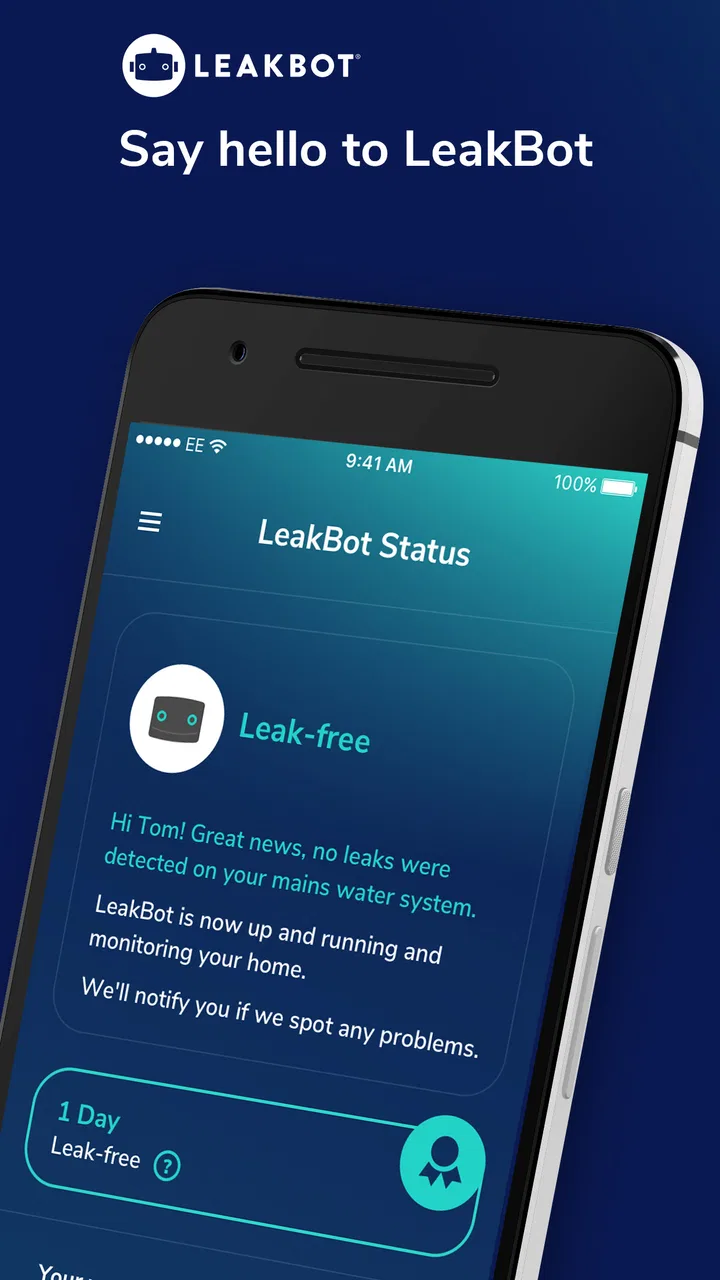
LeakBot is a smart water leak detection device that monitors your home’s plumbing system for leaks. It connects to your home Wi-Fi and uses advanced sensors to detect changes in water pressure. When a possible leak is detected, LeakBot sends alerts to your smartphone, allowing you to address the issue promptly and prevent potential water damage.
02Is LeakBot compatible with all plumbing systems?
LeakBot is designed to work with most standard plumbing systems found in residential homes. It does not require any professional installation or modifications to your existing setup. Simply attach it near your main water intake, and it will begin monitoring for leaks. However, it’s always a good idea to check the compatibility with your specific system before purchasing.
03How is the LeakBot app used to monitor water leaks?
The LeakBot app is available for both Android and iOS devices. Once you’ve installed the LeakBot device, download the app and connect it to your home Wi-Fi network. The app provides real-time alerts and detailed reports about the status of your plumbing system, including any detected leaks, helping you manage and maintain your home’s water system efficiently.
04Does LeakBot require regular maintenance or battery replacements?
LeakBot is designed to be low-maintenance. It comes with a built-in battery that typically lasts up to two years, depending on usage. The app will notify you when the battery is running low, ensuring you have ample time to replace it. There are no ongoing maintenance requirements, making it a convenient option for homeowners.
05What happens if a leak is detected by LeakBot?
When LeakBot detects a potential leak, it immediately sends a notification to your smartphone through the app. The notification will provide details about the leak, allowing you to take swift action. Some insurance providers may offer additional support or services when a leak is detected, so it’s worth checking if your provider has partnered with LeakBot for these benefits.
Pros
- Easy installation process.
- Real-time water leak alerts.
- Energy-efficient battery use.
- User-friendly interface.
- Integration with smart home systems.
Cons
- Requires stable Wi-Fi connection.
- Limited to specific regions.
- No manual leak detection option.
- Subscription needed for premium features.
- Initial device cost is high.

LeakBot
Gallery